
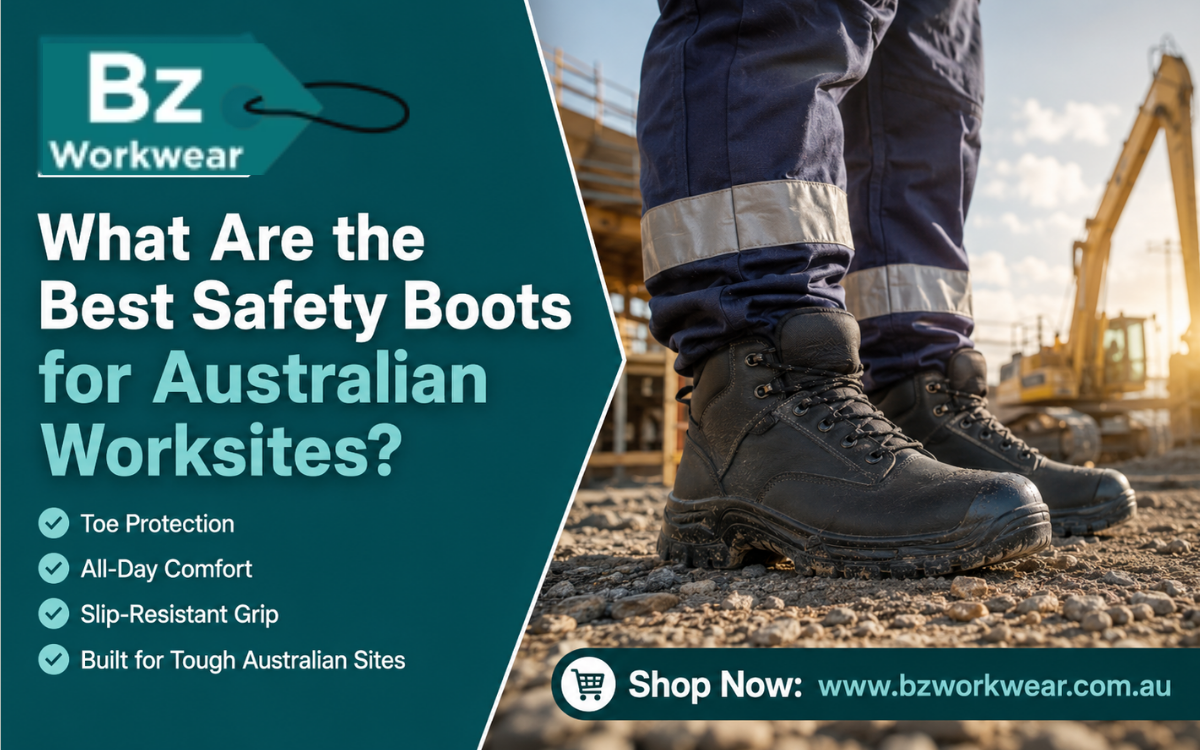
Choosing the right safety boots is an important part of preparing for work on Australian job sites. Whether you work in construction, warehousing, transport, manufacturing, maintenance or another hands-on industry, your footwear needs to provide the right balance of protection, comfort, durability and grip.
Workers searching for workboots perth should look beyond appearance and consider how the boots will perform throughout a full working day. Different worksites present different hazards, so the best safety boots are the ones that match your job requirements, working environment and individual comfort needs.
Why Choosing the Right Safety Boots Matters
Work boots are exposed to demanding conditions every day. Workers may spend hours standing, walking over uneven surfaces, climbing ladders, carrying equipment or moving between indoor and outdoor environments.
Poorly chosen footwear can become uncomfortable during a long shift and may not provide the features required for the work being performed.
Suitable safety footwear can help provide:
- Protection around the toes
- Better grip on workplace surfaces
- Support during long periods of standing and walking
- Greater durability in demanding environments
- Improved comfort throughout a working shift
- Protection suited to particular workplace hazards
Before buying boots, consider the actual conditions you experience rather than selecting footwear based only on price or appearance.
Look for the Right Toe Protection
Toe protection is one of the first features many workers consider when choosing safety boots.
Depending on the workplace, safety footwear may include steel toe caps or other protective toe-cap materials. These are designed to provide additional protection where there is a risk of objects falling, rolling or making contact with the feet.
Consider Your Workplace Hazards
Ask yourself whether your role involves:
- Carrying heavy tools or materials
- Working around machinery
- Moving building materials
- Handling stock in warehouses
- Working near equipment or vehicles
- Performing maintenance or trade work
The level and type of footwear protection required should always suit workplace safety procedures and the hazards associated with the job.
Prioritise Comfort for Long Working Days
Protection is essential, but comfort also matters when boots are worn for eight hours or longer.
A boot that feels acceptable during a short fitting may become uncomfortable after hours of standing, walking or climbing. Look for footwear that provides a secure fit without unnecessary pressure around the toes, heel or sides of the foot.
Useful comfort features may include:
- Cushioned footbeds
- Supportive midsoles
- Padded collars
- Comfortable linings
- Flexible construction
- Appropriate room around the toes
- Secure heel support
Workers should also consider the socks they normally wear on site because thicker work socks can affect boot sizing.
Check the Sole and Grip
Australian worksites can include concrete, gravel, dirt, ramps, workshops, warehouses and outdoor areas. Footwear needs to provide appropriate traction for the environment.
When comparing safety boots online, examine the sole design rather than focusing entirely on the upper material or boot style.
A practical work boot should offer grip suitable for the surfaces regularly encountered during your job.
Think About Your Typical Work Surface
For example:
- Construction workers may regularly move across dirt, concrete and uneven ground.
- Warehouse workers may spend most of the day on hard indoor flooring.
- Tradespeople may move between homes, worksites and outdoor areas.
- Maintenance workers may encounter both wet and dry surfaces.
No single sole design is perfect for every environment, so matching the footwear to the job is important.
Choose Durable Materials
Safety boots are often exposed to considerably more wear than everyday footwear.
Dust, mud, repeated bending, rough surfaces and regular contact with tools or materials can place stress on boots over time. Durable construction can therefore provide better long-term value than choosing footwear based solely on the lowest purchase price.
Look at areas such as:
- Upper material
- Stitching quality
- Sole attachment
- Reinforcement around high-wear areas
- Toe construction
- Heel construction
- Lace hardware or zip systems
The most suitable material will depend on your work environment and how the footwear is used.
Consider Weather and Working Conditions
Australian workers can experience very different conditions depending on their location, industry and season.
Someone working outdoors in hot weather may prioritise breathability, while another worker exposed to wet environments may need greater protection from moisture.
Hot Conditions
During warmer weather, consider footwear that balances workplace protection with comfort and ventilation.
Heavy, poorly ventilated boots may become uncomfortable during extended outdoor shifts.
Wet Conditions
Workers regularly exposed to rain, damp ground or wash-down areas should consider how well their footwear performs around moisture.
Remember that waterproof or water-resistant footwear may have different breathability characteristics, so choose according to your working environment rather than assuming one design suits every situation.
Lace-Up, Zip-Sided or Slip-On Safety Boots?
Safety boots are available in several different styles. The best option depends largely on your work routine and personal preference.

Lace-Up Boots
Laces allow workers to adjust the fit around the foot and ankle. They can be useful when a secure, adjustable fit is a priority.
Zip-Sided Boots
Zip-sided designs can make boots quicker to put on and remove while still providing the adjustable fit of laces on many models.
This can be convenient for workers who frequently change footwear when moving between work areas.
Slip-On Boots
Slip-on styles can provide convenience and are popular in some industries where workers want footwear without exposed laces.
The right design should fit securely and remain comfortable during normal workplace movements.
Make Sure Your Boots Fit Correctly
Correct sizing is one of the most important factors when purchasing safety footwear.
Boots that are too tight may create uncomfortable pressure, while footwear that is too loose can allow excessive movement around the heel.
When checking fit:
- Allow adequate space around the toes.
- Make sure your heel feels secure.
- Wear your usual work socks when trying boots.
- Walk around before deciding.
- Check for pressure around the sides of your feet.
- Consider how the boot feels when bending or climbing.
Do not automatically assume your work boot size will be identical across every style or brand.
When Should Safety Boots Be Replaced?
There is no single replacement schedule that suits every worker because wear depends on how often boots are used and the conditions they encounter.
Inspect footwear regularly for signs such as:
- Excessively worn soles
- Reduced tread
- Separating materials
- Damaged stitching
- Cracked uppers
- Damaged toe areas
- Reduced cushioning
- Persistent discomfort
Replacing heavily worn boots before their condition becomes a workplace concern can help maintain comfort and performance.
Why Choose BZ Workwear?
BZ Workwear helps Australian workers find practical clothing and footwear for demanding working environments. With workwear, safety footwear and other job-ready essentials available in one place, customers can compare options based on their role, comfort needs and working conditions. Rather than choosing footwear purely by appearance, BZ Workwear makes it easier to explore practical options designed for everyday workplace use.
When shopping for work boots online australia, browsing a dedicated work boot collection also makes it easier to compare different styles, features and designs before deciding which footwear best matches your job.
Final Thoughts
The best safety boots for Australian worksites are not necessarily the heaviest, most expensive or most feature-packed option. The right choice depends on your workplace hazards, the surfaces you work on, the hours you spend on your feet and the conditions you experience throughout the day.
Focus on appropriate protection, secure fit, reliable grip, durable construction and all-day comfort. Taking the time to compare these factors can help you choose safety footwear that performs effectively during real working conditions rather than simply looking suitable on the shelf.