
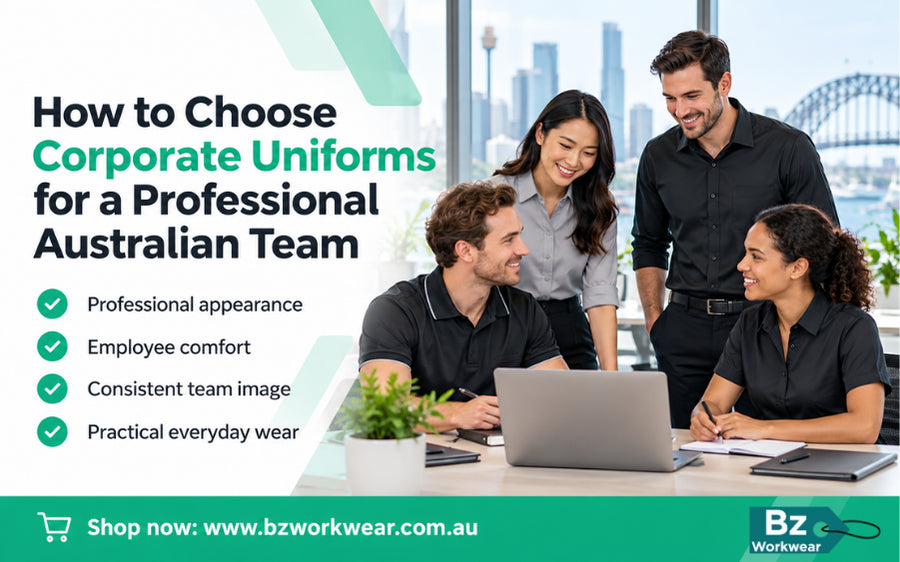
A professional workplace appearance starts with clothing that suits both the business and the people wearing it. Corporate uniforms help organisations establish a consistent identity while giving employees clear guidance about appropriate workplace attire. However, selecting the right garments involves more than matching shirts, trousers and jackets.
For businesses exploring corporate uniforms Australia, the key is balancing professional presentation, employee comfort, practical functionality and long-term value. A suitable uniform should reflect the organisation's identity, accommodate different roles and remain comfortable throughout the working day.
This guide explains how Australian businesses can make informed uniform decisions, from selecting fabrics and sizes to managing budgets and coordinating team outfits.
Why Do Corporate Uniforms Matter for Australian Businesses?
Corporate uniforms create a recognisable appearance across an organisation. They can help employees present a consistent image when interacting with customers, attending meetings or representing their company at professional events.
A coordinated uniform policy can also simplify workplace clothing expectations. Rather than leaving employees uncertain about suitable attire, businesses can establish clear guidelines while allowing appropriate flexibility.
Key considerations include:
- Professional presentation: Coordinated clothing supports a consistent workplace appearance.
- Brand recognition: Carefully selected colours and styles can reflect an organisation's visual identity.
- Employee convenience: A defined uniform range can reduce uncertainty about daily work clothing.
- Team consistency: Different departments can maintain a connected appearance without wearing identical outfits.
- Practicality: Suitable garments can accommodate everyday tasks and different working environments.
The objective should not be to make every employee look exactly the same. Instead, businesses should create a coordinated clothing system that accommodates individual needs.
Choose Corporate Uniforms Based on Employee Roles
Not every employee performs the same duties, so a single uniform style may not suit the entire organisation.
For example, reception staff may require polished clothing for frequent customer interaction, while administrative employees may benefit from comfortable garments designed for extended periods of desk work.
Reception and Customer Service Teams
Employees who regularly welcome visitors or assist customers often benefit from coordinated shirts, blouses, tailored pants or skirts.
Neutral colours can provide a professional foundation, while subtle brand-colour accents may help connect uniforms with the company's identity.

Office and Administration Staff
Office employees frequently alternate between sitting, standing and moving around shared workspaces.
Clothing with an appropriate fit, practical waistbands and sufficient freedom of movement may be more suitable than restrictive formal garments.
Managers and Client-Facing Professionals
Employees attending presentations, meetings or formal business events may need access to blazers, jackets, tailored trousers or coordinated business dresses.
These garments can complement everyday office clothing without requiring a completely separate uniform range.
Practical tip: Define the clothing requirements for each role before selecting specific products. This can help businesses avoid purchasing garments that employees rarely use.
What Fabric Is Best for Corporate Uniforms?
Fabric selection influences how a uniform feels, looks and performs during regular wear.
Australian workplaces experience varied conditions, from warm outdoor temperatures to heavily air-conditioned offices. Businesses should consider the actual working environment rather than selecting materials based only on appearance.
When comparing corporate workwear, pay attention to fabric composition, garment construction, care instructions and the movement required during daily tasks.
Common Corporate Uniform Fabrics
|
Fabric Type |
Potential Advantages |
Considerations |
|
Cotton |
Soft feel and generally good breathability |
May crease and require ironing |
|
Polyester blends |
Often offer shape retention and practical care requirements |
Breathability varies between garments |
|
Poly-viscose |
Can provide a smooth appearance suitable for tailored clothing |
Feel and performance depend on the blend |
|
Stretch blends |
May improve flexibility and ease of movement |
Check stretch recovery and washing instructions |
No single material is automatically the best choice for every organisation.
A lightweight shirt might suit an employee working in a warm reception area, while a structured jacket may be more appropriate for formal meetings.
Businesses should also consider how frequently uniforms will be washed. Garments requiring specialist cleaning may introduce additional maintenance costs or inconvenience for employees.
How to Choose the Right Fit and Size for Your Team
Even attractive corporate clothing can be unsuitable when the fit restricts movement or causes discomfort.
Instead of selecting sizes based on employees' usual casual clothing, use the measurements and size charts provided for each garment.
Different brands and clothing styles may use different sizing systems.
Check These Details Before Ordering
- Chest and bust measurements: Ensure shirts, blouses and jackets provide enough room for comfortable movement.
- Waist and hip fit: Check that trousers and skirts remain comfortable when sitting and standing.
- Sleeve length: Confirm sleeves suit the employee's preferred coverage and workplace activities.
- Garment length: Consider whether shirts need to remain tucked in and whether jackets provide the intended coverage.
- Movement: Employees should be able to sit, reach and walk comfortably without excessive pulling or restriction.
Where practical, arranging sample garments or a small initial order can help businesses assess sizing before purchasing for an entire team.
Providing different cuts and styles within a coordinated colour range can also help employees find clothing that suits their body shape and comfort preferences.
Match Corporate Uniforms With Your Business Image
Uniforms should complement the organisation's overall presentation rather than compete with it.
A financial services office may prefer traditional shirts, jackets and tailored trousers. A creative agency might adopt a more relaxed combination of blouses, knitwear and smart pants.
Both approaches can appear professional when the clothing is appropriate for the workplace.
Build a Consistent Colour Palette
Start with two or three colours that work well together.
Navy, charcoal, black and white are common choices for corporate clothing because they can be combined with different garments.
Businesses may also incorporate brand colours through selected shirts, scarves, ties or other accessories.
Allow Coordinated Outfit Options
Instead of requiring one fixed outfit, consider an approved clothing range that employees can combine.
For example, a business might select navy trousers and skirts, white or pale-blue shirts, and matching jackets for formal occasions.
This approach provides variety while maintaining a recognisable team appearance.
If logos or embroidery are required, confirm decoration compatibility and available services with the supplier before ordering.
Plan Your Corporate Uniform Budget and Ordering Needs
The purchase price is only one part of a uniform programme's overall cost.
A lower-priced garment may initially appear attractive, but businesses should also evaluate construction quality, care requirements, replacement needs and suitability for repeated wear.
Before placing an order, consider:
- The number of employees requiring uniforms.
- How many working days each employee needs to be covered.
- The frequency of washing and drying.
- Whether seasonal clothing is necessary.
- Additional garments for new employees.
- Expected replacement requirements.
- Whether consistent styles and colours are likely to remain available.
For example, employees attending the office five days a week may benefit from multiple shirts or blouses, while occasional office-based staff may require fewer garments.
The appropriate quantity depends on each organisation's uniform policy and laundering arrangements.
Businesses should establish a realistic purchasing plan instead of assuming every employee needs an identical number of items.
Common Mistakes to Avoid When Selecting Corporate Uniforms
Uniform purchasing decisions can become more complicated when businesses focus heavily on appearance without considering everyday use.
Choosing Style Without Considering Comfort
A highly structured outfit may look suitable in photographs but feel restrictive during extended wear.
Review garment details and, where possible, assess samples before making a larger commitment.
Ordering Without Confirming Sizes
Using one brand's size chart for a different manufacturer's garments can lead to avoidable fitting problems.
Check measurements for each selected style.

Ignoring Garment Care
Some fabrics require ironing, specific washing temperatures or professional cleaning.
Confirm care requirements before introducing a uniform policy, especially when employees are responsible for maintaining their clothing.
Selecting Too Many Different Styles
Excessive variation can make it difficult to maintain a consistent appearance or arrange replacements.
A smaller range of coordinated options is often easier to manage.
Forgetting Future Employees
Organisations should consider how uniforms will be supplied when team members join, change roles or require replacement garments.
Planning ahead can reduce inconsistencies between existing and new employees.
About BZ Workwear: Corporate Clothing for Australian Businesses
BZ Workwear is an Australian online retailer supplying workwear, uniforms and safety apparel to businesses and individual customers across Australia. Operated by Krishna WA Pty Ltd, the company provides clothing options for corporate offices and other professional workplaces.
Its product range includes recognised workwear and uniform brands such as Biz Collection and Biz Corporates. Customers can explore men's and women's shirts, blouses, trousers, skirts, dresses, jackets, knitwear and corporate accessories.
BZ Workwear also supports businesses purchasing uniforms for teams and offers Australia-wide delivery, making its online range accessible to organisations in different locations.
Businesses reviewing office wear Australia options can compare available garments to find styles suited to their workplace dress requirements, employee preferences and budget.
Frequently Asked Questions
1. What should employees wear in a corporate office in Australia?
Appropriate corporate office clothing depends on the organisation's dress code, employee responsibilities and workplace environment. Common options include collared shirts, blouses, tailored trousers, skirts, dresses and jackets. Businesses should provide clear guidelines while considering comfort, fit and practical requirements.
2. What is the best fabric for corporate uniforms in hot weather?
Lightweight fabrics with suitable breathability can be helpful in warm conditions. Cotton and certain lightweight blends may be appropriate, depending on their construction. Employers should also consider garment fit, ventilation, moisture management and whether employees work indoors or outdoors.
3. How many corporate uniforms should an employee have?
The number depends on working days, washing frequency and the organisation's uniform policy. Employees working full-time may need several interchangeable tops and suitable bottom garments. Providing enough clothing between laundry cycles helps maintain a practical uniform routine.
4. How can businesses maintain a consistent uniform appearance across different employees?
Businesses can establish a coordinated colour palette and approve a selection of complementary garments. Offering multiple fits and styles allows employees to choose suitable clothing while maintaining an overall professional appearance. Clear dress guidelines also help different departments follow the same standards.
Final Thoughts
Choosing corporate uniforms requires an understanding of how employees work, what the organisation wants to communicate and how the clothing will perform over time.
Begin by identifying workplace requirements, then compare fabric options, sizing, styles and maintenance needs. Involve employees where practical, and plan for future uniform replacements rather than focusing only on the initial purchase.
A thoughtfully selected uniform range can help an Australian business maintain a coordinated appearance while supporting the everyday comfort and practical needs of its team.